 Everyday growing
Ollie’s Worry Wobbles
Name a worry, share it and try one small brave step together.
Get this free pack Collyvale A little place for big feelings.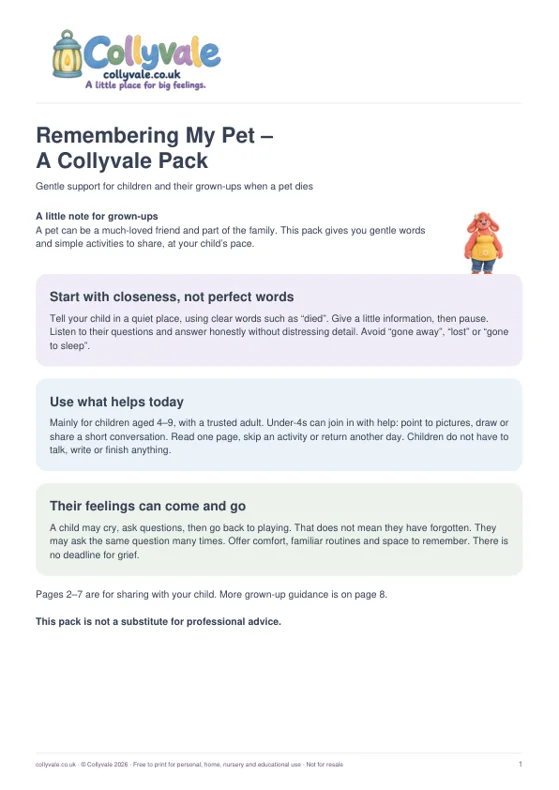
Free printable pack · When a pet dies
Gentle words and activities to share when a much-loved pet dies. With Riley’s help, explain what “died” means, answer the questions children ask, and find your own way to remember, at your child’s pace.
Email me this packFree · Printable PDF · No book needed
A pet can be a much-loved friend and part of the family. When a pet dies, a child may cry, ask questions, then go back to playing. These free printables give you clear, gentle words and simple activities to share. There is no right way to feel.
The pack uses clear words like “died” rather than “gone to sleep”, and gently reminds children that nothing they thought or said made their pet die.
Pop in your email and we’ll send the download link straight to your inbox. Joining our monthly letter is optional.
If the form does not appear or is difficult to use, open the request form in a new tab.
Read our privacy information.
This pack is mainly for children aged 4 to 9 whose pet has died, or is very ill, and for the grown-ups supporting them. Under-4s can join in with help, by pointing to pictures or drawing. You can use it straight away or weeks later, because feelings often come and go.
The pack is mainly for ages 4–9, with a grown-up alongside. Under-4s can join in with help, by pointing to pictures, drawing or having a short chat.
Yes. The 8-page printable pack is free. Joining A Little Letter from Collyvale, our monthly email, is optional and separate.
Yes. The grown-ups’ page includes ideas for an optional quiet goodbye, guided by your vet, and how to prepare your child. Never force a child to join in, or make them responsible for the decision.
Enter your email address in the form above. We’ll email you the download link so you can save the PDF and print the pages you want. Check your junk folder if it hasn’t arrived.
Yes, you can print extra copies for your own family, for example a memory page for each child.
Yes, please print it for your own family, classroom, preschool or group. If you’d like to share it, send people the link to this page rather than the PDF. The packs, stories and characters are © Brendan Martin, Collyvale. Please don’t sell them, or upload them to other websites, including in changed form.
The Association for Pet Loss and Bereavement offers pet-loss support at aplb.org. Speak to your child’s doctor if their distress gets worse, or affects their sleep, eating, school or daily life. This pack is not a substitute for professional advice.
Collyvale is made by Brendan Martin, a father and grandfather who wanted to help families through everyday wobbles. Read more about Collyvale.
Everyday growingName a worry, share it and try one small brave step together.
Get this free pack Everyday growing
For bedtime worries in general, including bad dreams and waking in the night.
Get this free packCollyvale provides general information, stories and family activities. It is not a medical or mental-health service and does not replace professional advice. If a child's worry is persistent, severe or interfering with everyday life, speak to their school, school nurse or doctor. If you're worried about your own wellbeing, please talk to your doctor. You can also find trusted information at healthychildren.org.