 New experiences
Bella’s Big Open Wide
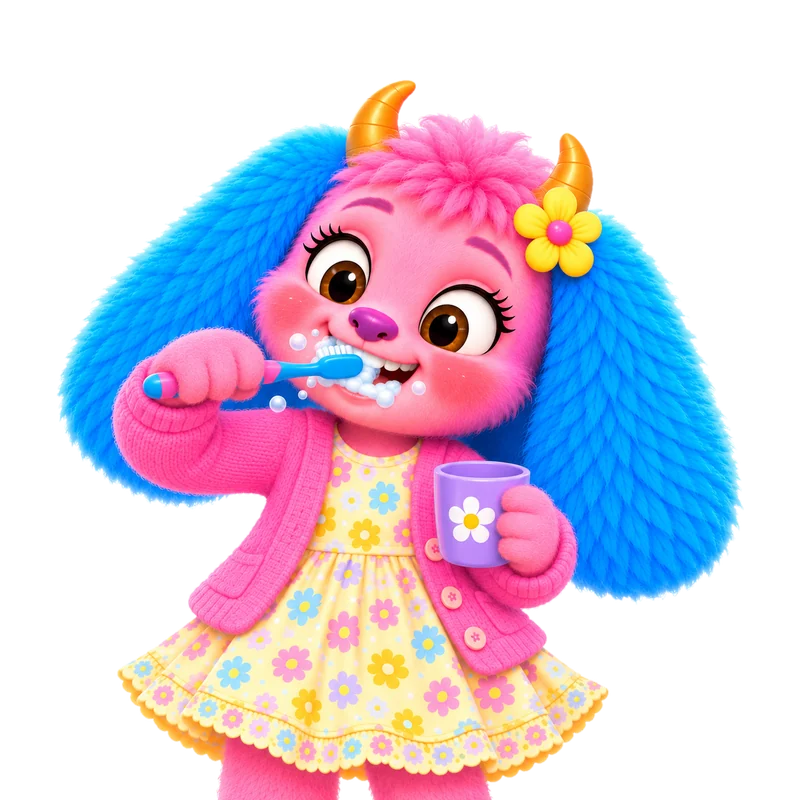
Make dentist visits more familiar and practice asking for a pause.
Get this free pack Collyvale
A little place for big feelings.
Collyvale
A little place for big feelings.
Free printable pack · Doctor visits & shots
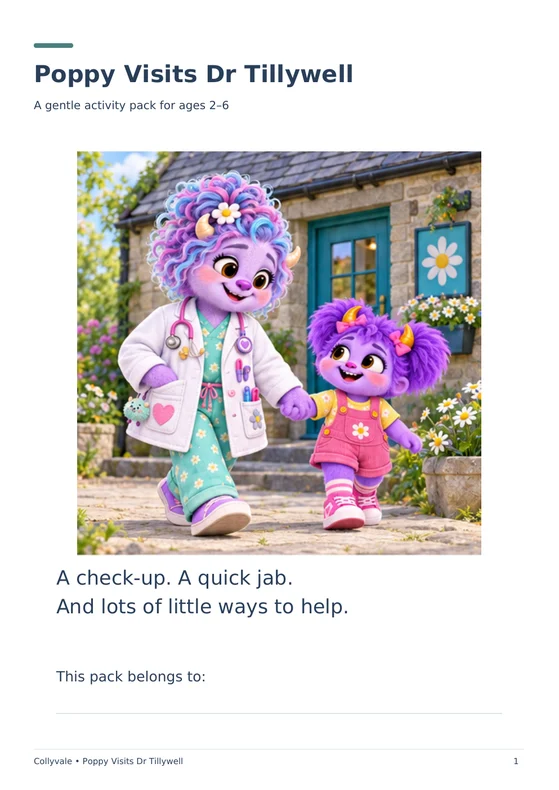
A gentle pack to make doctor visits and shots feel a little more familiar. Read Poppy’s story with Dr. Tillywell and Nurse Nuzzle, get ready together, and choose the little things that help your child feel brave, at their own pace.
Email me this packFree · Printable PDF · No book needed
Poppy is three, and today she is visiting Dr. Tillywell’s clinic for a check-up and a quick shot. These free printables help children know what to expect, and help grown-ups feel ready too. It is OK to feel worried, and it is OK to cry.
The pack never promises that something won’t hurt. It uses honest, gentle words, like “it might feel like a quick scratch, then it’s done”, and praises trying: tears and wobbles still count as brave.
Pop in your email and we'll send the download link straight to your inbox.
This pack is for children aged around 2 to 6 who have a doctor’s appointment or a vaccination coming up, or who simply feel unsure about visiting the clinic, and for the grown-ups who go with them. Feeling worried about the doctor or a shot is very common. Knowing what might happen, and having a plan for what helps, can make it feel a little smaller.
The suggested range is ages 2–6, with a grown-up alongside. Younger children can point, tick and color; older children may like to choose their own brave plan and draw their feelings.
Yes. The 12-page printable pack is free. Joining A Little Letter from Collyvale is optional; you can leave its checkbox unticked and still request your pack.
No. The story includes a check-up and a quick shot, but most pages work for any doctor’s or nurse’s visit. A check-up and a vaccination may happen at separate appointments, so it’s worth asking the clinic what to expect.
Enter your email address in the form above. We’ll email you the download link so you can save the PDF and print the pages you want. Check your junk folder if it hasn’t arrived.
Yes, you can print extra copies for your own family, for example before each visit. Keep the PDF saved so it is easy to return to.
Yes, please print it for your own family, classroom, preschool or group. If you’d like to share it, send people the link to this page rather than the PDF. The packs, stories and characters are © Brendan Martin, Collyvale. Please don’t sell them, or upload them to other websites, including in changed form.
No. Collyvale is a storybook world, not medical advice. For questions about vaccinations or your child’s health, talk to your doctor or nurse, or read vaccination guidance for parents at HealthyChildren.org.
Collyvale is made by Brendan Martin, a father and grandfather who wanted to help families through everyday wobbles. Read more about Collyvale.
New experiences
Make dentist visits more familiar and practice asking for a pause.
Get this free pack New experiences
Collyvale provides general information, stories and family activities. It is not a medical or mental-health service and does not replace professional advice. If a child's worry is persistent, severe or interfering with everyday life, speak to their school, school nurse or doctor. If you're worried about your own wellbeing, please talk to your doctor. You can also find trusted information at healthychildren.org.